How Fast Can You Turn a Business Around?
Speed matters in a turnaround — the longer trouble persists, the greater the risk. But how fast is realistic depends on several factors, internal and external. This guide covers what drives turnaround speed, what to expect at each stage, and the research on matching the pace of change to how much change you actually need.
What drives turnaround speed
Several key factors influence how fast a business can be turned around — some external (market conditions, competition), some internal (leadership, resources, the severity of the decline). One of the earliest moves in any turnaround is retrenchment — stabilizing by cutting back — which researchers John A. Pearce II and Keith Robbins identify as an initial stage of the overall process. In their 2008 follow-up, "Strategic Transformation as the Essential Last Step in the Process of Business Turnaround," they went further, mapping how the speed of change relates to its magnitude.
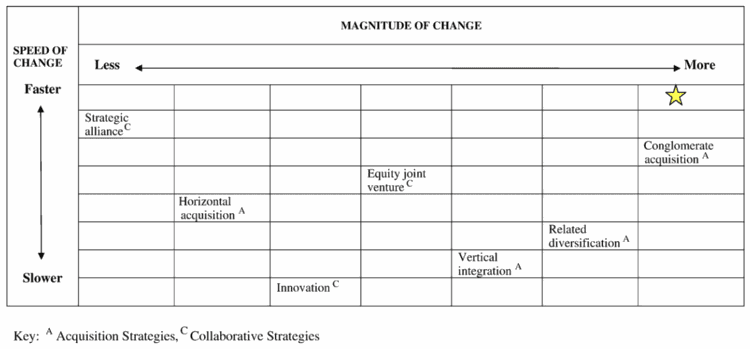
The practical lesson from that matrix: how fast you can move depends on how big a change you're making. A strategic alliance can shift things quickly; a deep structural transformation takes longer by nature. Matching your timeline to the magnitude of change you actually need is how you set realistic expectations.
3 to 6 months
In the first 3–6 months, the priority is a comprehensive plan and fast strategic initiatives. Start with a thorough assessment of your financials, operations, and market, then establish clear, specific goals for the turnaround. This is the stabilize-and-diagnose window — the moves here set up everything that follows, and they mirror the early turnaround phases.
6 to 9 months
The 6–9 month window shifts to implementation — executing the strategies and initiatives identified during assessment. Monitor progress closely and adjust as results come in; this is where a plan meets reality and needs steady correction. A structured framework helps here rather than improvising, which is what the ten free strategy templates are built for.
9 to 12 months
By 9–12 months, the focus turns to sustaining and reinforcing the changes you've made. Continuously monitor and evaluate through regular performance reviews, and lock in the improvements so they hold. Whether you go the DIY route or hire a consultant, this stage is about consistency — and much of the ongoing monitoring is repeatable work that AI tools that do the work can handle for a few dollars, keeping the gains from slipping.
Is your business ready to move fast?
If your business is struggling, assessing your readiness is the first step toward a fast turnaround. Speed depends on knowing exactly where the problems are before you start — otherwise you burn early momentum chasing symptoms. The quickest way to get that clarity is a free Biz Health Check, which pinpoints your biggest issue in a few minutes.
Summary
The ability to turn a business around quickly matters in a competitive market — time is of the essence, and delay compounds risk. But "fast" is relative to the magnitude of change you need: match the pace to the problem, move decisively through each stage, and keep reinforcing the gains. Done right, a business doesn't just recover — it comes out stronger and faster-moving than before.