The 4 Phases of a Business Turnaround
A turnaround unfolds in a clear sequence: Analysis, Emergency, Strategic Change, and Growth/Renewal. Some frameworks split it into more stages — assess, triage, stabilize, turnaround, growth — but the essential path is these four. Here's what each phase does and how they build on each other.
The four phases
Each phase forms the foundation for the next. Skip one, or rush it, and the recovery gets shaky — the sequence matters as much as the work inside it.
1. Analysis
The turnaround starts with a thorough assessment of the current situation — gathering all the relevant data on the company's financials, operations, market position, and customers. You can't fix what you haven't honestly diagnosed, so this phase is about seeing the business clearly before touching anything. A free turnaround plan is a structured way to run this first assessment.
2. Emergency
Once you understand the state of the business, the emergency phase takes immediate action on the urgent threats to survival. This is the "stop the bleeding" stage — cost-cutting, protecting cash, and resolving whatever could sink the business in the near term. Speed matters here more than polish.
3. Strategic Change
With the immediate threats handled, the strategic change phase shifts to long-term fixes. This is where you identify and address the underlying issues and weaknesses that caused the decline in the first place — not just the symptoms. The ten strategy templates give you a framework for each recognized turnaround strategy at this stage.
4. Growth / Renewal
The final phase is growth and renewal. Once the changes are in place and the company is back on a stable path, the focus turns to expanding the customer base, increasing sales and revenue, improving profitability, and securing long-term sustainability. This is the payoff — a business that's not just surviving but building forward.
The virtuous cycle behind the phases
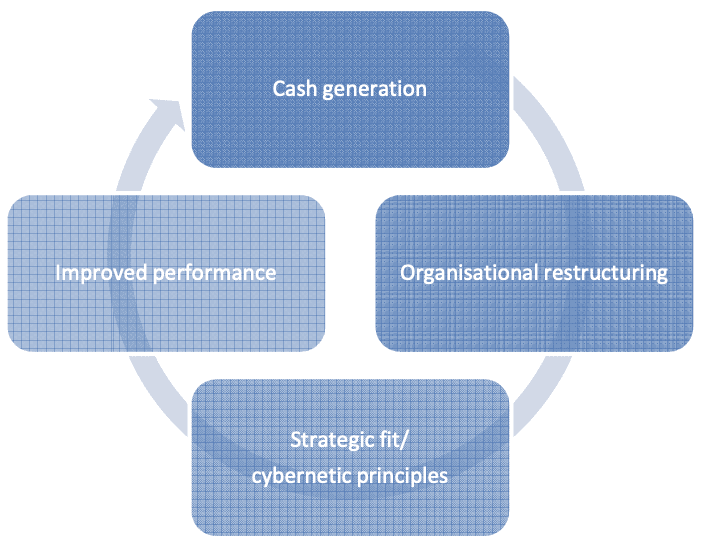
Experts look at more than a linear sequence. Researcher Ian Roberts at the University of Manchester describes the phases as a virtuous cycle that feeds and fuels itself: cash generation enables organizational restructuring, which supports strategic fit and cybernetic principles, which drive improved performance — which in turn generates more cash, and the cycle strengthens.
Other researchers frame it differently but arrive at similar structure. In 2004, Franz T. Lohrke, Arthur G. Bedeian, and Timothy B. Palmer described the phases as the turnaround situation, the turnaround response, and the outcome — with the management process shifting focus from one phase to the next, always beginning by assessing the current situation.
The stages that lead to failure
Understanding the phases of recovery is easier when you can see the decline they reverse. The path to business failure runs downhill in stages: underperformance leads to distress, distress hardens into crisis, and crisis — left unaddressed — ends in failure.
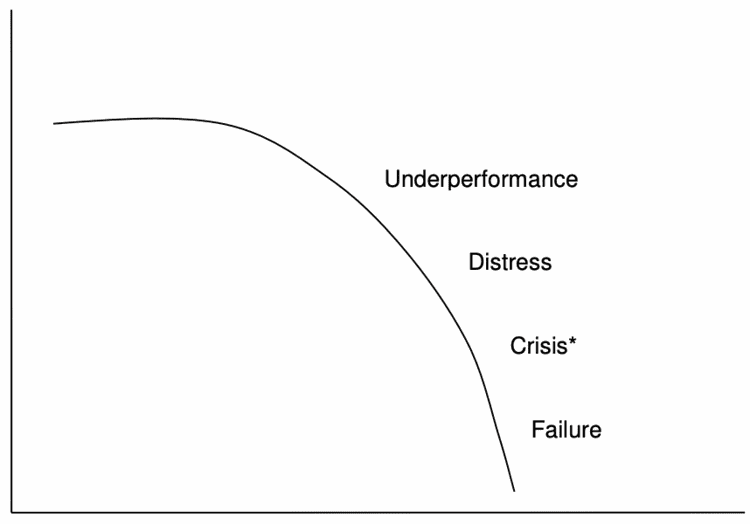
The earlier a business catches itself on that slope, the more room it has to turn around. Waiting until crisis narrows the options and raises the cost of every fix — which is exactly why the analysis phase, done early and honestly, is so valuable.
Ready to start phase one?
The phases are simple once you know what to expect. The hard part is starting the first one honestly — and that's the part you can do today. Effective execution means taking an objective approach, moving quickly through assignments, and navigating the unknowns as they come. Put the thoughts and figures together with a free turnaround plan to get moving on the complete picture.