Finance Change Management: A Practical Guide
Finance change management is how organizations navigate financial transformation without losing control — the structured approach to planning, implementing, and managing changes to financial processes, systems, and strategy. Done well, it turns a risky transition into a controlled improvement. Here's what it is and how to do it.
What finance change management is
At its core, finance change management is a systematic approach to managing and implementing changes within financial processes and systems. When a business is undergoing a turnaround, assessing the current financials is one of the very first steps — and financial ratios are where that assessment starts. They tell you, in hard numbers, where the business actually stands before you change anything.
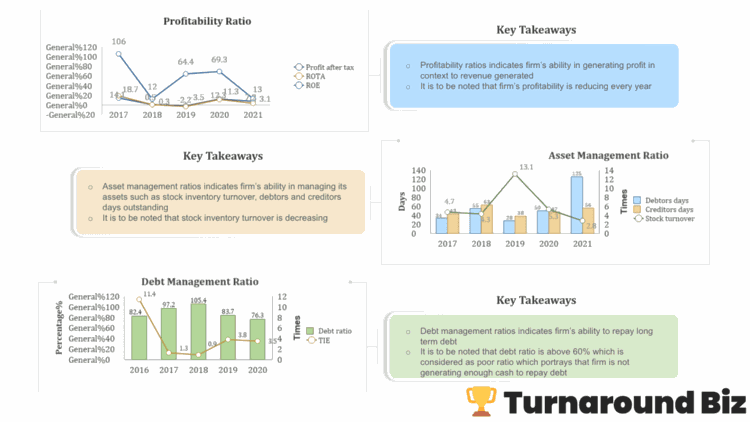
With a clear read on the ratios, you're far better prepared to undertake change. The reasons businesses take this on are consistent: improving financial operations and efficiency, enhancing accuracy, implementing new financial technologies, addressing risk and ensuring compliance, and supporting the broader organizational transformation a turnaround requires.
Why change management matters in finance
Change management isn't a mere process — it's often the factor that determines whether a finance initiative succeeds or fails. A structured approach establishes a solid foundation, and the benefits are tangible: reduced employee resistance and higher engagement, minimized disruption to financial operations, greater stakeholder confidence, better alignment of financial goals, and a stronger return on the investment. Skipping it is how good financial ideas die in implementation.
The four-stage process
The change management process in finance comprises four key stages, each essential to the outcome:
- Planning — assess the need for change, identify what has to change, and map out how.
- Communication — clearly and consistently explain the change to everyone affected; this is where most initiatives are won or lost.
- Implementation — execute the plan, managing the transition actively rather than hoping it lands.
- Evaluation — measure the results against the objectives and adjust; the step teams most often neglect.
Neglecting any single stage undermines the whole. Following the sequence deliberately is what lets a finance team adapt without chaos.
Engaging your team
Employee engagement is decisive in finance change. Engaged employees resist less, contribute valuable insight, and work with more motivation through the transition. The strategies that drive it are practical: provide clear, transparent communication; involve employees in decisions that affect them; offer training and support so they're equipped, not overwhelmed; recognize contributions; and build a positive change culture. Leaders set the tone here — communicating the vision and modeling the change they're asking for.
Building a finance change plan
A detailed plan is your roadmap. It starts with three moves: identify clear objectives (what the change is actually for), assess the current state honestly (where you're starting from), and define the scope precisely (which areas of finance are in and which are out). From there the plan extends into timeline, resources, and the metrics you'll evaluate against. A structured framework beats improvising — which is exactly what the free strategy templates are built to give you.
Where tools carry the load
Much of finance change management is recurring work: pulling the numbers, tracking the ratios, reporting on progress, watching cash. That's the part that quietly slips when a team is busy managing the change itself. It's also exactly the kind of repeatable work ready-made business tools handle for a few dollars — keeping the financial picture current and honest throughout the transition, so the evaluation stage has real data to work with instead of stale spreadsheets.
The takeaway
Finance change management turns financial transformation from a gamble into a managed process: start from a clear read on the numbers, follow the four stages, engage the people who have to live the change, and plan it deliberately. Keep the recurring measurement running underneath it all, and the change holds. Not sure where your financial pressure points are? A free Biz Health Check is a fast way to find out.