Key Elements of a Business Turnaround
A business turnaround revitalizes a struggling company and points it back toward success — but only if the right elements are in place. Turning a business around means identifying and addressing the issues that matter most, and recognizing which elements make the difference between a recovery that holds and one that doesn't.
Turnaround strategy components
Turnaround techniques are built from many components — some used more often than others, all chosen based on the individual needs of the business. The core set worth knowing:
- Turnaround analysis — the honest diagnostic of where the business stands
- Marketing & sales — rebuilding demand and revenue
- Cash flow generation — protecting and improving liquidity
- Products & services — fixing or repositioning what you sell
- Crisis recognition — seeing trouble early enough to act
- Organizational change — reshaping how the business runs
- Stakeholder support — keeping owners, staff, and partners aligned
Not every turnaround uses all of them, and the right mix depends entirely on the situation — which is why the analysis component comes first. To put your own set together, you can start a turnaround plan for free.
Zimmerman's three-factor framework
In The Turnaround Experience: Real-World Lessons in Revitalizing Corporations, researcher Frederick M. Zimmerman proposed that a successful turnaround rests on three factors working together: low-cost operation, product differentiation, and an appropriate turnaround organization (leadership). Each factor is built from its own set of elements:
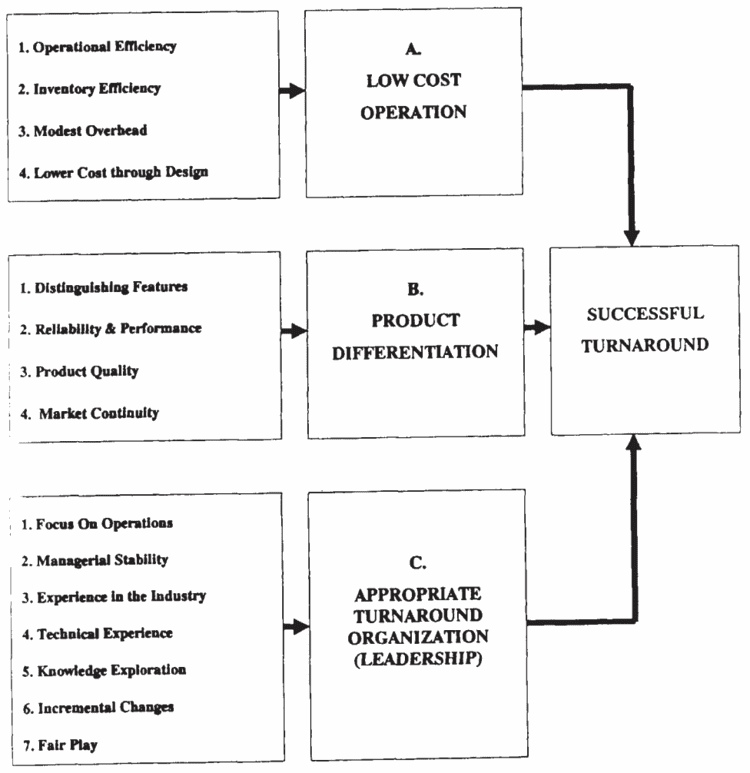
What makes the framework useful is how it connects the tactical to the structural: cost and product decisions only stick when the organization and leadership are set up to sustain them. A turnaround that fixes costs but ignores leadership tends to slide back.
Putting the elements together
These elements are what turn a struggling business around and keep it healthy long-term — but knowing them isn't the same as executing them. The businesses that recover take proactive measures instead of passively accepting the situation, and they bring in the right guidance when developing the plan. Much of the execution is repeatable work that doesn't need an expert; for that part, turnaround specialists are worth reserving for the genuinely hard calls.
Key takeaways
The elements of a turnaround are crucial to reviving a struggling business and securing its long-term success — but each situation is unique, so the right combination is never one-size-fits-all. Start with an honest analysis, choose the components that fit, and execute proactively. When you're ready to assemble your own, the free turnaround plan is the place to begin.