
Finance change management is a vital practice for organizations aiming to navigate the complex world of financial transformations. It involves planning, implementing, and monitoring changes to financial systems, processes, and strategies to drive positive outcomes and maximize performance.
Join us as we unlock the power of finance change management and empower your organization to thrive in an ever-evolving financial landscape.
Finance change management involves the systematic approach to managing and implementing changes within financial processes, systems, and technologies. It is a critical function within organizations that helps ensure smooth transitions and efficient financial operations.
When involved in a business turnaround, assessing the current financials of a firm is one of the first steps. Assessing the financial ratios is a topic covered in the business strategy templates which is shown as an example below.
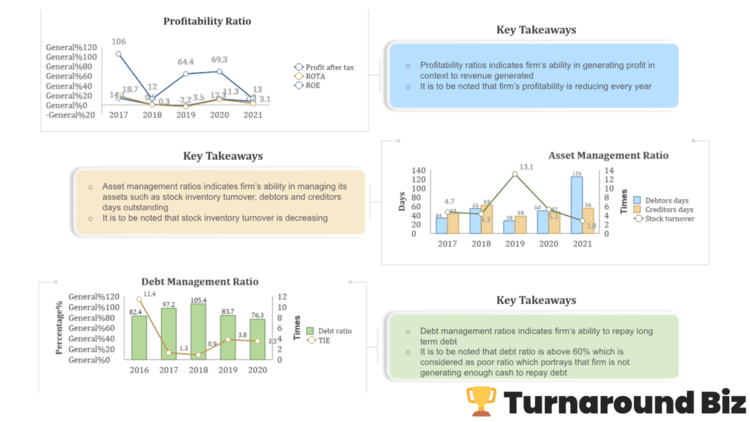
With the right starting point on the financial ratios, you’ll be better prepared to undertake financial change management for your organization.
Finance change management refers to the structured process of planning, implementing, and managing changes within the financial aspects of an organization. It includes identifying areas within financial operations that require improvement, assessing risks, and implementing strategies to address them.
Change management plays a vital role in any finance organization undergoing a transformation. It involves the structured approach to transitioning individuals, teams, and entire departments to a desired financial state.
Change management is not just a mere process; it is a critical factor that can determine the success or failure of a finance project. In the context of finance, change management helps organizations navigate the complexities of financial transformations, ensuring that the desired outcomes are achieved without disruptions to daily operations.
Effective change management establishes a solid foundation for successful finance change initiatives. By implementing change management principles, finance organizations can address resistance to change, ensure stakeholder buy-in, and minimize disruption to business operations during times of transition. This, in turn, increases the likelihood of achieving desired financial outcomes and overall project success.
Benefits of incorporating change management principles in finance projects:
By incorporating change management principles, finance organizations can proactively address the human and structural aspects of change, leading to improved project outcomes and long-term sustainable success.
In the world of finance, change is inevitable. From new technological advancements to evolving market trends, organizations must be prepared to adapt and navigate these changes successfully. This is where finance change management comes into play.
Finance change management is the structured approach to managing and implementing change within the finance department of an organization. It involves a series of well-defined processes aimed at ensuring a smooth transition and minimizing disruption.
The change management process in finance comprises several key stages that are vital to achieving successful outcomes. These stages include planning, communication, implementation, and evaluation.
Each stage in the change management process holds significant importance in achieving the desired outcomes. Neglecting any stage can lead to resistance, confusion, and ultimately, failure to implement meaningful change in the finance department.
By following a structured change management process in finance, organizations can adapt to new challenges, improve efficiency, and stay ahead in an ever-changing financial landscape.
Employee engagement is a crucial factor in the success of finance change initiatives. When employees are actively engaged and committed to the changes, the chances of successful implementation are significantly higher. It is essential to involve and empower employees throughout the change process to ensure their support and collaboration.
Employee engagement plays a vital role in finance change management for several reasons. Firstly, engaged employees are more likely to embrace change and adapt to new processes and systems. Their positive attitude and willingness to learn contribute to a smoother transition.
Additionally, engaged employees tend to offer valuable insights and suggestions, as they feel empowered to contribute to the change process. By involving employees in decision-making, organizations can benefit from their diverse perspectives and expertise.
Moreover, high levels of employee engagement lead to increased motivation and productivity. When employees feel connected to the goals and objectives of the change, they are more likely to exert extra effort to achieve them. This heightened motivation helps in maintaining the momentum and driving the change forward.
Leadership plays a crucial role in driving employee engagement and fostering a positive change culture within the finance organization. Leaders should lead by example and demonstrate their commitment to the change. They can inspire and motivate employees by being transparent, accessible, and supportive throughout the process.
Effective leaders communicate the vision and importance of the change, setting clear expectations and goals for employees. They actively listen to employees’ concerns, address any resistance, and provide guidance and assistance as needed. By creating a sense of purpose and direction, leaders can rally employees behind the change and promote a positive change culture.
When implementing finance change management, it is crucial to have a detailed plan in place. This plan will serve as a roadmap for the entire process, ensuring that all necessary steps are taken to successfully manage the changes. Here are key steps for creating a comprehensive finance change management plan:
Before embarking on any change management initiative, it is imperative to clearly define the objectives. This involves identifying the desired outcomes and clearly stating what needs to be achieved through the finance change process.
To effectively manage change in finance, it is essential to assess the current state of affairs. This includes evaluating the existing financial systems, processes, and structures. It will help pinpoint areas that require improvement or modification.
Clearly defining the scope of the change is critical. It involves identifying the specific areas of finance that will be impacted by the change. This step helps manage expectations and ensures that everyone understands the boundaries of the finance change initiative.
Creating an action plan is integral to successfully execute the finance change management process. This plan will outline the specific tasks, responsibilities, and timelines associated with each step of the change initiative. It provides a structured approach and helps keep the project on track.
Effective change management requires the allocation of appropriate resources. This includes financial resources, as well as human resources with the necessary expertise. By ensuring that resources are readily available, the finance change management plan can be executed efficiently.
Communication and engagement are vital components of a finance change management plan. It is essential to communicate the purpose, benefits, and goals of the change to all stakeholders involved. Employee engagement is crucial for successful change implementation, and regular communication helps create buy-in and build trust.
An effective finance change management plan includes mechanisms to monitor progress and evaluate the outcomes. Regularly assessing the implementation and its impact allows for adjustments and improvements along the way. This step ensures that the desired objectives are being achieved.
Change is a continuous process, and it is important to adapt and refine the finance change management plan as needed. This involves learning from experiences, soliciting feedback, and making necessary adjustments to ensure that the change is sustainable and yields long-term benefits.
By following these steps and creating a comprehensive finance change management plan, organizations can effectively navigate the complexities of change and drive successful transformations.
Communication plays a critical role in successful finance change management. It is the key to ensuring that all stakeholders, including employees and other decision-makers, are well-informed and aligned with the changes being implemented. Effective communication enables organizations to smoothly navigate through transitions and achieve their desired outcomes.
Clear and transparent communication is vital during the change management process in finance. It helps in building trust, reducing uncertainty, and managing expectations among stakeholders. Effective communication ensures that everyone understands the necessity of the changes and the impact they will have on the organization.
By establishing open lines of communication, organizations can engage employees, address concerns, and encourage participation. It also allows stakeholders to provide feedback, ask questions, and contribute their ideas to the change management process.
As organizations undergo finance change initiatives, it is crucial to upskill finance teams to ensure a smooth transition and successful outcomes. Upskilling not only equips staff members with the necessary knowledge and expertise but also boosts their confidence and productivity in managing and adapting to change.
Importance of upskilling finance teams during change initiatives
During finance change management, new technologies, processes, and policies are often introduced. Without proper training, employees may struggle to understand and implement these changes effectively. By investing in training and skill development, organizations can bridge the skills gap and enable their finance teams to navigate the complexities of the changing landscape.
Strategies for providing training on new technologies, processes, and policies
Examples of successful training initiatives and their impact on finance change outcomes
When it comes to finance change management, measuring performance and evaluating the success of initiatives is crucial. It allows companies to not only track progress but also identify areas of improvement for future projects. In this section, we will explore the key aspects of measuring performance and evaluating finance change management.
To effectively measure the success of finance change initiatives, it is important to establish relevant metrics and performance indicators. These could include financial metrics such as cost savings, return on investment, or revenue growth. Additionally, non-financial metrics like employee satisfaction, customer feedback, or process efficiency can provide valuable insights. By defining these metrics from the outset, organizations can ensure objective evaluation and comparison.
Tracking progress and evaluating outcomes are crucial steps in evaluating finance change management. It is essential to have a systematic approach in place to track the implementation progress of change initiatives. This could include regular project status updates, milestone tracking, or even using project management tools. By monitoring the outcomes of finance change projects, organizations can identify successes and potential areas for improvement.
Measuring performance in finance change management provides organizations with an opportunity for continuous improvement. By analyzing the results of performance measurement, companies can identify gaps and take corrective actions. This may involve implementing additional training programs, realigning resources, or refining processes. It is important to view performance measurement as a catalyst for ongoing enhancements in finance change management practices.
By establishing metrics and performance indicators, tracking progress, and continuously improving based on performance measurement results, organizations can ensure effective finance change management. Not only will this lead to successful change initiatives, but it will also drive overall growth and improvement in the finance sector.
By adopting a proactive approach towards finance change initiatives and embracing continuous improvement, organizations can enhance their financial systems, achieve greater efficiency, and stay ahead of the competition.

Staff writers contribute to the knowledge base at TurnaroundBiz.com. Our writers exhibit applied knowledge and wisdom throughout the content and help readers understand the turnaround process better by sharing experiences.