

Addressing turnaround inquiries promptly and effectively is essential for any business owner or executive aiming to restore profitability, competitiveness, and overall success. By thoroughly understanding the intricacies of turning around a business, you can proactively navigate potential pitfalls and set your organization on the right track to recovery.
Delve into the world of business turnarounds with us, as the focus is on the most pressing questions and challenges that business owners often encounter. From recognizing the key signs of a business in need of a turnaround to implementing effective strategies, we will provide you with valuable insights every step of the way.
As turnaround professionals serving more than 20 years combined with the leadership team intact, we have heard all the questions in helping clients to turnaround their companies for success, and now we want to share the insights with you. At TurnaroundBiz.com, we feel it’s important to offer valuable information so you know where to turn for turnaround management support, when in need.
By the end of this guide, you will have a solid understanding of the turnaround process and feel equipped to tackle any turnaround business question that comes your way. So, let’s dive in and discover how to bring a business back from the brink of failure.
Key Questions for Achieving Turnaround
Below are the questions for answering with your turnaround.
- Essential questions to ask when developing a turnaround strategy:
- When crafting a turnaround strategy, it is crucial to address key questions such as:
- What are the root causes of the business decline?
- What are the short-term and long-term goals of the turnaround?
- How can the company differentiate itself in the market?
- When crafting a turnaround strategy, it is crucial to address key questions such as:
- Addressing operational, financial, and strategic aspects:
- To achieve a successful turnaround, it is important to consider questions like:
- How can operational inefficiencies be identified and resolved?
- Are there any cost-cutting measures that can be implemented without jeopardizing the company’s growth?
- Are there any strategic partnerships or alliances that can be pursued to improve the business?
- To achieve a successful turnaround, it is important to consider questions like:
- The role of leadership and change management in turnaround situations:
- Leadership and change management play a crucial role in turnaround situations. Some key questions to consider are:
- How can leadership effectively communicate the need for change and inspire employee buy-in?
- What steps can be taken to align the organization’s culture with the desired turnaround vision?
- How can resistance to change be effectively managed?
- Leadership and change management play a crucial role in turnaround situations. Some key questions to consider are:
For Turnaround Shutdown and Outage Management, author Tom Lenahan has the following example available:
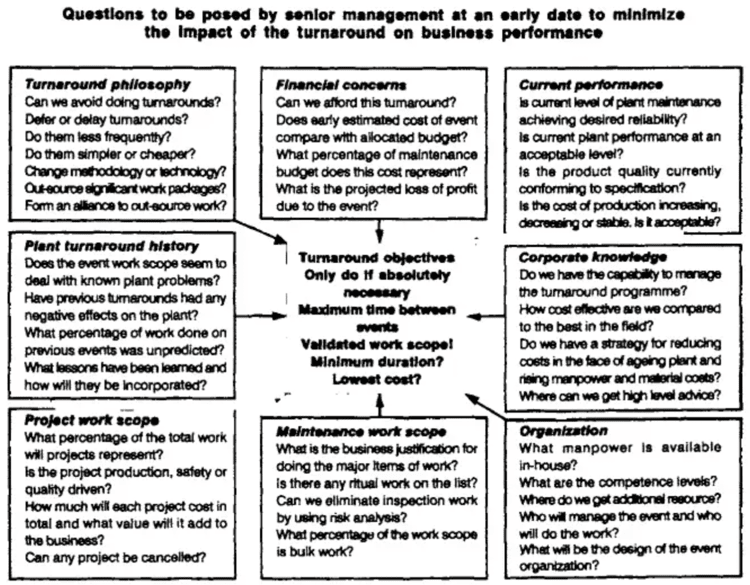
As the starting point to the turnaround, the above will give a baseline for digging in further with the data. To do a proper assessment, you’ll need readily access to data and key information about the company to fill-in.
Information Requirements for Turnaround
When undertaking a turnaround, having access to the right information is crucial for success. Here are the key aspects to consider:
A thorough understanding of the company’s financial and operational performance, market conditions, and competitive landscape is necessary. This includes analyzing sales figures, profit margins, cash flow, customer feedback, and employee productivity.
- Sources for gathering relevant data and industry benchmarks: Business owners and managers can gather valuable information from various sources such as financial statements, industry reports, market research, competitor analysis, and customer surveys. Additionally, benchmarking against industry peers to identify performance gaps can provide valuable insights.
- Utilizing technology and tools to streamline data collection and analysis: In today’s digital age, leveraging technology can significantly enhance turnaround efforts. Utilize software tools, CRM systems, and data analytics platforms to gather, analyze, and visualize data efficiently. Automated reporting and dashboard solutions can also provide real-time insights for informed decision-making.
These types of reports can be gathered both internally and through third parties, however a business turnaround consultant is the type of role that pieces it together to make data informed decisions, in the capacity of solely improving the business’ current condition. As with any endeavor though, there are issues which need to be addressed first to rule out extra variables in the process.
Proposed in the now classic article titled “Information Requirements of Turnaround Managers at the Beginning of Engagements” by researchers William Fredenberger, Astrid Lipp, and Hugh Watson, the analyses needed during a turnaround has seemed to stand the test of time since 1997. The figure below includes the accumulated knowledge of data collection to date at that time, and continues to serve as a starting point for any turnaround professional today.
Performance Measurement and Metrics for Turnaround
Evaluation of turnaround progress through performance measurement is crucial for assessing the effectiveness of the turnaround strategies implemented. By monitoring key metrics and targets, organizations can gauge their progress towards achieving the desired outcomes.
Setting key metrics and targets to measure success
When embarking on a turnaround journey, it is essential to define the metrics that will be used to measure success. These metrics should align with the organization’s objectives and reflect the desired outcomes of the turnaround efforts. Key metrics may include financial indicators such as revenue growth, profitability, and cash flow improvement. Other metrics could focus on operational efficiency, customer satisfaction, or employee engagement.
By setting specific targets for each metric, organizations can track their performance and determine whether they are on track to achieve their turnaround goals.
Leveraging performance measurement and reporting tools, organizations can effectively monitor their turnaround progress, identify areas for improvement, and make informed decisions to drive success.
Business Valuation and Asset Management during Turnaround
Assessing business value and valuing assets during a turnaround is crucial for understanding the current financial state of the company. It involves analyzing various factors such as the company’s market position, revenue streams, profitability, and potential for growth.
Additionally, valuing assets is essential to determine their worth and potential for generating cash flow. This includes assessing tangible assets such as property, equipment, and inventory, as well as intangible assets like intellectual property, brand reputation, and customer relationships.
In a study by Ian Roberts from Manchester Business School, the researcher provides a perspective based on a company structure as it is used to assess various lines of business for a manufacturer. Of the three divisions, the Tile Division is the only viable model based on the perspective of concept derived from the Business Cybernetics concept invented by Stafford Beers.
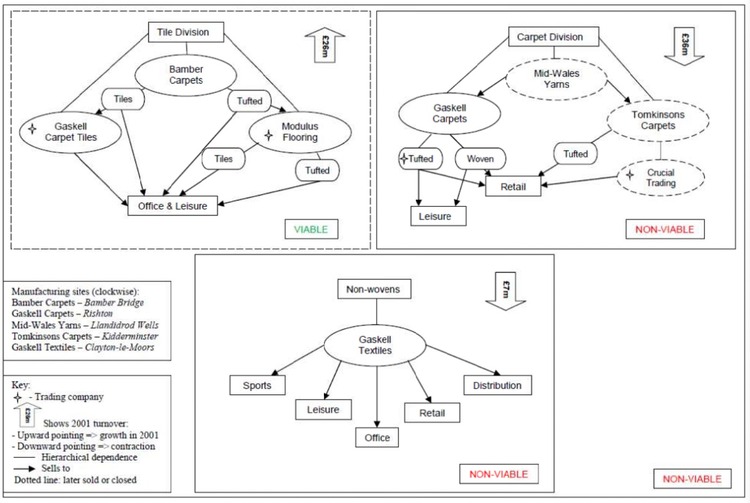
By strategically valuing and managing assets during a turnaround, businesses can enhance their financial position, generate cash flow, and secure the resources necessary for successful recovery.
Business Analysis for Turnaround
When it comes to turning around a struggling business, conducting a thorough business analysis is crucial. This analysis helps identify key issues and provides valuable insights for developing a successful turnaround strategy. Let’s take a closer look at the various aspects involved in the business analysis for turnaround:
- Identifying Key Issues: The first step in the business analysis process is identifying the primary problems and challenges the business is facing. This includes examining all areas of the company, from operations and finances to marketing and human resources.
- Assessing Financial Health and Performance: Understanding the financial health and performance of the business is essential in crafting an effective turnaround plan. This involves analyzing financial statements, cash flow, profitability, and liquidity to determine the root causes of financial distress.
- Analyzing Market Trends and Competition: Examining market trends and analyzing the competitive landscape helps identify opportunities for growth and points of differentiation. Understanding industry dynamics and customer preferences can guide strategic decision-making during the turnaround process.
Common Turnaround Issues
When it comes to turning around a struggling business, there are several common issues that need to be identified and understood. These issues can range from financial challenges to operational and strategic hurdles. In order to successfully navigate a turnaround, it is important to be aware of these issues and develop strategies for addressing and resolving them.
- Identifying and understanding the most common issues faced during a turnaround: During a turnaround, it is crucial to accurately identify and understand the key issues that are contributing to the business’s decline. This requires a comprehensive analysis of the company’s financial, operational, and strategic performance. By identifying and understanding these issues, the turnaround team can develop targeted strategies to address them and set the business on a path to recovery.
- Strategies for addressing and resolving these issues: Once the common issues have been identified, it is important to develop strategies for addressing and resolving them. This may involve implementing cost-cutting measures, restructuring operations, or repositioning the business in the market. In some cases, seeking external expertise or guidance may be necessary to effectively address these issues and ensure a successful turnaround. Strong leadership and effective communication are also critical in executing these strategies and gaining buy-in from stakeholders.
By recognizing and addressing the common issues faced during a turnaround, businesses can increase their chances of achieving a successful turnaround and positioning themselves for long-term growth and profitability.
Expert Experiences in Turnaround Situations
Get insights from industry experts who have successfully navigated turnaround scenarios. Learn from real-life stories and experiences, and discover the lessons learned along the way. These experts share best practices and strategies that can help you achieve turnaround in your own business.
Real-life Stories and Experiences
Discover firsthand accounts of turnaround experts who have faced turnaround situations. Hear about the challenges they encountered and the strategies they implemented to turn businesses around. These stories will provide valuable insights and inspiration for your own turnaround journey.
Lessons Learned and Best Practices
Learn from the experiences of successful turnaround cases. Understand the key factors that contribute to a successful turnaround and the best practices that can be applied to your own business. Discover the common pitfalls to avoid and the strategies that yield the best results.
Case Studies Highlighting Challenges and Strategies
Explore the stories that highlight the challenges faced during turnaround situations and the strategies implemented to overcome them. These case studies will provide practical examples and actionable insights that can be applied to your own business.
Takeway
Addressing the challenges of turnaround situations requires a comprehensive analysis and strategic implementation of key business strategies and it starts by answering key questions. These questions help uncover hidden issues, identify strategic opportunities, and guide decision-making throughout the entire turnaround process.
By taking proactive steps to address turnaround business questions head-on, businesses can overcome challenges and pave the way for success and long-term growth.