When it comes to achieving peak performance in industries, operational benchmarking is the secret weapon that leading companies are using to gain a competitive edge. So, what exactly is operational benchmarking? In this article, we will dive into the definition and explanation of operational benchmarking, uncovering its significance in various industries.
At Turnaround Biz, we are involved in operational benchmarking seemingly in a continuous way, so we want to share the knowledge usually saved solely for clients of business turnaround services, though there are certain pointers we share with you in this article.
Understanding Benchmarking
Benchmarking is a crucial tool in evaluating and improving business operations. By comparing your company’s performance against industry standards or best practices, you gain valuable insights to identify areas of improvement, set realistic goals, and implement strategies to enhance your operational efficiency.
Definition and Concept of Benchmarking
Benchmarking is the systematic process of measuring an organization’s performance against recognized standards or industry benchmarks. It involves studying the best practices of other companies or industry leaders and comparing them to your own in order to identify gaps and areas for improvement.
Benchmarking helps businesses gain a clearer understanding of where they stand in terms of performance, efficiency, and competitiveness. It provides valuable insights into the strategies, processes, and technologies that can be adopted to achieve desired outcomes.
Operations Benchmarking
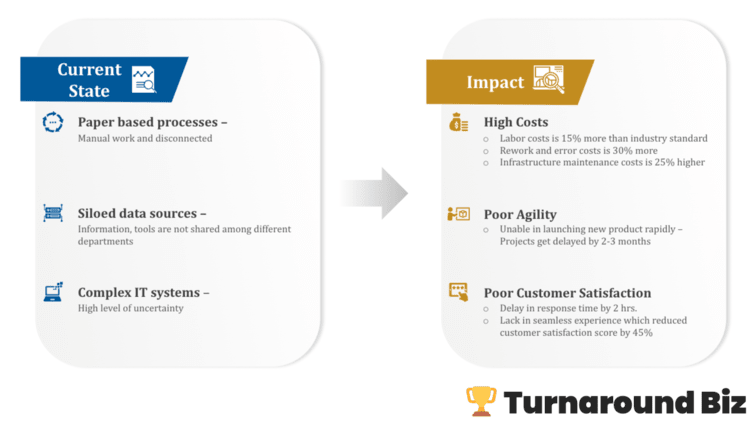
What is current state of firm operations? You want to know that before benchmarking. The current state of a firm’s operations should be declared so that a transformation to a state of impact can be established. The image below is from Turnaround Biz’s business turnaround strategy templates which are freely available to download, if you want to tailor the graphic to your firm’s needs.
Operational Benchmarks
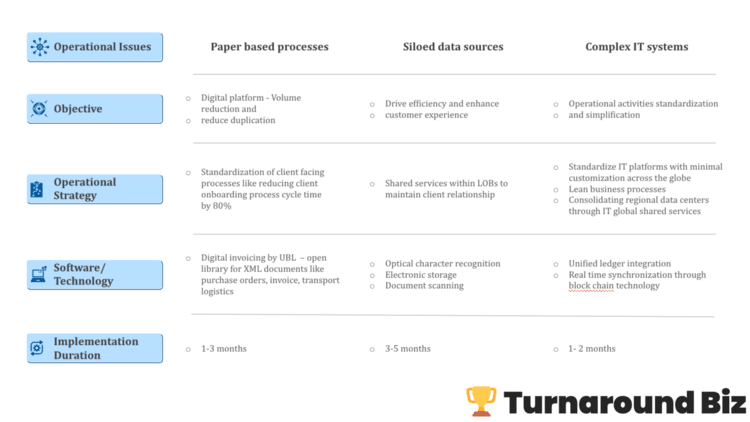
The slide below shows information regarding the technological advancement adapted by firm in order to enhance its core operational efficiency through transformation which originally served as operational benchmarks.
C. Benefits of Benchmarking in Business Operations
The practice of benchmarking offers numerous benefits for businesses seeking to optimize their operations. Some key advantages include:
- Identification of performance gaps and opportunities for improvement.
- Enhancement of operational efficiency and cost reduction.
- Identification and implementation of best practices.
- Enhanced competitiveness and market positioning.
- Improved customer satisfaction and loyalty.
- Stimulation of innovation and continuous improvement.
Benchmarking enables organizations to gain a comprehensive understanding of their current performance and industry trends. By learning from top performers and implementing strategies aligned with best practices, businesses can achieve sustainable growth and stay ahead of the competition.
Process of Operational Benchmarking
Operational benchmarking is a powerful initiative that can lead to significant improvements within an organization. By comparing performance metrics against industry standards, businesses can identify areas for improvement and implement strategies to enhance their operations. The process of operational benchmarking involves three key steps:
A. Identifying Key Performance Indicators (KPIs)
In order to effectively benchmark operational performance, it is crucial to identify the right Key Performance Indicators (KPIs). KPIs are specific metrics that help measure the success of an organization in achieving its objectives. They provide insights into the performance of various business processes and help track progress towards goals. Selecting relevant KPIs is essential for accurate benchmarking results. The significance of KPIs is mainly in their ability to measure performance objectively and consistently.
B. Gathering Comparative Data
Once KPIs are defined, the next step is to gather comparative data from various sources. These data sources can include internal organizational data, industry benchmarks, professional organizations, government agencies, and publicly available data. It is important to ensure the data collected is both reliable and relevant to achieve meaningful benchmarking results. Methods to collect and analyze data can range from surveys and questionnaires to data mining and sophisticated analytics tools.
C. Comparing Performance Metrics
After the data is gathered, the focus shifts to comparing and analyzing performance metrics. This process involves a detailed analysis of the collected data to identify gaps and areas of improvement. The metrics are evaluated against industry standards and best practices to determine the organization’s performance level. By comparing performance metrics, businesses can identify strengths and weaknesses and implement strategies to enhance operational efficiency and effectiveness.
Applications of Operational Benchmarking
A. Improved Operational Efficiency
Operational benchmarking helps businesses optimize their processes and identify areas of improvement. By comparing their operations to industry best practices, companies can identify inefficiencies and implement changes to enhance their operational efficiency.
- 1. Optimizing processes and identifying areas of improvement: Through operational benchmarking, businesses can identify gaps in their processes and streamline them for improved efficiency. This can lead to reduced costs, increased productivity, and better overall performance.
- 2. Implementing best practices based on benchmarking results: Benchmarking allows companies to adopt industry best practices that have been proven to be successful. By implementing these practices, businesses can improve their operations and achieve higher levels of efficiency.
B. Cost Reduction and Revenue Optimization
Operational benchmarking plays a crucial role in identifying cost-saving opportunities and optimizing revenue generation for businesses.
- 1. Analyzing financial data to identify cost-saving opportunities: By analyzing financial data and comparing it to industry benchmarks, businesses can identify areas where costs can be minimized without compromising on quality. This can lead to significant cost savings.
- 2. Enhancing revenue generation through process optimization: Benchmarking helps businesses identify ways to optimize their processes and enhance revenue generation. By adopting best practices and improving efficiency, companies can increase their revenue streams and maximize profitability.
C. Enhancing Data Analytics Capabilities
Operational benchmarking provides businesses with valuable data that can be utilized for data-driven decision-making and improving future performance evaluations and management.
- 1. Utilizing benchmarking data for data-driven decision-making: By utilizing benchmarking data, businesses can make informed decisions based on industry best practices and performance benchmarks. This improves decision-making processes and reduces the risk of errors.
- 2. Improving future performance evaluations and management: Benchmarking helps businesses in setting performance targets, tracking progress, and improving future evaluations and management. It provides a basis for performance comparisons and facilitates continuous improvement.
Tips and Best Practices for Effective Operational Benchmarking
Operational benchmarking is a crucial tool for businesses aiming to improve their performance and gain a competitive edge. To ensure a successful benchmarking process, it is important to follow these tips and best practices:
A. Setting measurable goals and expectations
Before starting the benchmarking process, it is essential to clearly define the goals and expectations. These goals should be measurable and aligned with the overall business objectives. By setting specific targets, you can track progress and determine the effectiveness of benchmarking efforts.
B. Establishing a structured benchmarking process
A structured benchmarking process enables organizations to gather relevant data and compare their performance against industry standards or best practices. It is important to design a step-by-step approach that includes identifying key performance indicators, collecting data, analyzing findings, and implementing improvement strategies.
C. Involving key stakeholders and ensuring buy-in
Operational benchmarking should not be a siloed effort. Involving key stakeholders, such as department heads or team leaders, ensures the buy-in and cooperation necessary for success. By involving the right people, you can gain valuable insights and foster a collaborative environment for implementing improvements.
D. Regularly reviewing and updating benchmarks based on changing industry standards
The business landscape is constantly evolving, and so should your benchmarks. Regularly reviewing and updating benchmarks based on changing industry standards ensures that your organization stays relevant and continues to improve. This practice allows you to adapt to new technologies, trends, or customer expectations that may impact your operational performance.
By following these tips and best practices, businesses can effectively utilize operational benchmarking to identify areas for improvement, drive innovation, and achieve optimal performance.
Summary
Operational benchmarking plays a crucial role in driving performance improvement. By embracing it, businesses have the opportunity to stay competitive and achieve success in their respective industries. This approach allows organizations to identify areas of improvement, learn from industry leaders, and implement best practices to enhance their operations.
As businesses continue to face growing competition and evolving market dynamics, embracing operational benchmarking becomes even more critical. It provides organizations with a valuable tool to assess their performance and identify areas where they can enhance their operations.
With an ever-changing business landscape, it is essential for businesses to constantly evaluate their performance and seek opportunities to improve. Operational benchmarking offers a structured approach to effectively analyze and improve processes, ensuring businesses can adapt to market demands.