
A business turnaround plan is a strategic framework designed to steer a struggling company back on the path to success. When a business finds itself in a state of decline or facing significant challenges, a well-structured and comprehensive turnaround plan becomes its beacon of hope.
Having a carefully crafted turnaround plan is important as it provides a roadmap for navigating through difficult times and revitalizing the business. By clearly outlining the necessary courses of action and strategies, it ensures that every step is aligned with the overall goal of restoring profitability and stability.
The key objectives of a successful business turnaround are to reverse financial losses, enhance operational efficiency, and strengthen the company’s competitive position in the market. By implementing an effective turnaround plan, a business can expect to see positive outcomes such as increased revenue, improved cash flow, enhanced employee morale, and renewed investor confidence.
In answering the call to a new industry standard, as pointed out by researchers John A. Pearce II and Keith Robbins in their 1993 Journal of Management article proclaiming, “The need is for systematic theory building based on carefully designed and skillfully executed empirical research on turnaround situations and responses,” this plan generator helps you take next steps for your turnaround.
In 2008, Turnaround in Small and Medium Size Enterprises by researcher Gabriela Golumbovici at Oxford Brookes University constructed a mindmap for the entry point into planning and improvising. The action research spiral as shown below starts with the initial idea for change intervention.
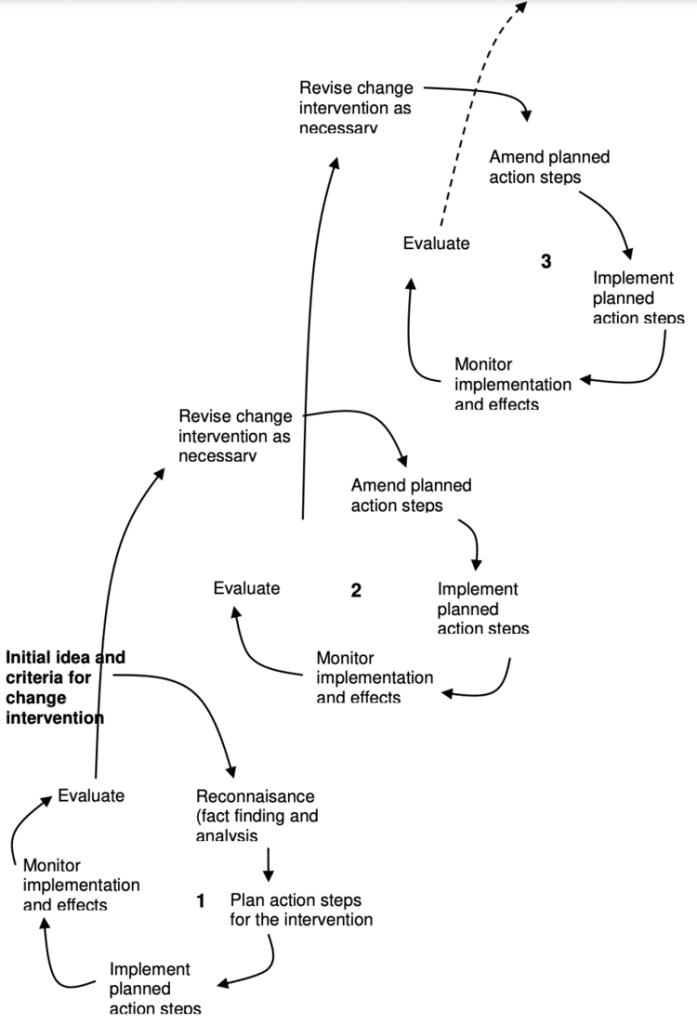
Based on the researcher’s model, the initial idea leads into finding facts which leads into a plan to implement.
However, it’s not just about the plan thereafter– it’s all about get timely information throughout the entire turnaround process. That’s why turnaround managers prefer real-time data over historical data, according to a 1997 study published in The Journal of Management Information Systems. In their study, researchers Fredenberger, Lipp, and Watson interviewed 100 turnaround managers using a three-stage process that was used to develop the survey instrument in this study. Of the participants, financial and working capital reports were the most preferred immediate reports to have along with timely cash flow projections.
External Expertise and Advisory Support
Securing assistance from turnaround specialists or experts can greatly contribute to the success of a business turnaround plan. These type of turnaround professionals bring a wealth of knowledge and experience in turnaround situations, enabling them to provide valuable insights, guidance, and specialized skills.
By leveraging external resources, businesses can tap into a wide range of expertise and perspectives that may not exist internally. This can be particularly beneficial when dealing with complex issues or industry-specific challenges.
External experts can offer a fresh and objective viewpoint, free from internal biases and politics. They can provide an independent assessment of the business’s current state, identifying areas of improvement and potential risks that may have been overlooked.
In addition, advisory support can help businesses develop and refine their turnaround strategies. These experts can assist in creating a well-defined plan, outlining specific actions to be taken and milestones to be achieved. They can also provide ongoing monitoring and evaluation, ensuring that the plan stays on track.
Collaborating with external professionals can also help in building credibility with stakeholders, such as lenders, investors, or customers. Their presence and involvement demonstrate a commitment to finding solutions and implementing necessary changes.
External expertise and advisory support play a crucial role in the success of a business turnaround plan. By leveraging the knowledge and skills of outside specialists, businesses can increase their chances of achieving a timely and effective turnaround.
Financial Future and Performance
As part of any comprehensive business turnaround plan, it is crucial to address the financial future and performance of the company. This section focuses on setting realistic financial goals, monitoring financial performance, and developing long-term strategies for sustainable growth.
Setting Realistic Financial Goals for the Future
A key step in the business turnaround process is setting realistic financial goals for the future. This involves analyzing the current financial situation of the company and determining achievable targets that align with the overall turnaround objectives. Whether it’s reducing costs, increasing revenue, or improving profitability, setting clear and measurable goals is essential for progress.
Monitoring Financial Performance and Making Necessary Adjustments
Once financial goals are established, it is important to closely monitor the company’s financial performance on an ongoing basis. This includes regularly reviewing financial statements, tracking key performance indicators (KPIs), and comparing actual results against the set goals. By identifying any gaps or areas of improvement, necessary adjustments can be made to keep the business on track towards its financial objectives.
Developing Long-Term Financial Strategies for Sustainable Growth
A successful business turnaround plan goes beyond short-term fixes. It must include the development of long-term financial strategies that ensure sustainable growth and success. By analyzing market trends, competitor activities, and internal capabilities, a robust financial strategy can be formulated. This strategy may involve diversifying revenue streams, exploring new markets, optimizing pricing models, or implementing innovative financial management practices.
Addressing the financial future and performance of a company is a critical component of any business turnaround plan. By setting realistic financial goals, monitoring performance, and developing long-term strategies, organizations can position themselves for sustainable growth and success.
Get started today
Proactive measures are paramount to ensuring the success of the turnaround plan. A reactive approach is insufficient in addressing the challenges and complexities of a struggling business. By proactively identifying issues, implementing necessary changes, and consistently monitoring performance, organizations can mitigate risks, optimize results, and pave the way for a successful turnaround.
Use the form to start the plan for your turnaround today!